
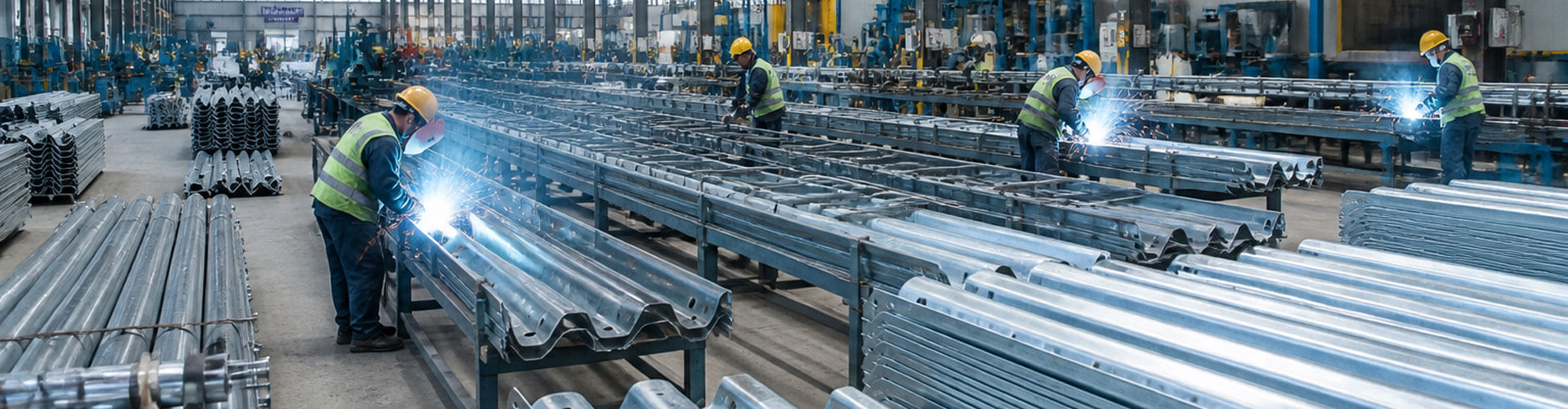
 Sep 11, 2026
 105
105
 admin
admin
Road safety infrastructure is entering a faster cycle of change. Urban projects need barriers that install quickly, adapt to traffic changes, reduce maintenance disruption and provide useful operational data. Guardrails are becoming coordinated systems of structural members, replaceable modules, sensors, lighting, connectors and maintenance information.
Road space is shared by vehicles, pedestrians, cyclists, buses and light rail. Maintenance must continue while traffic moves, while weather and inspection demands raise lifecycle pressure. These conditions reward systems that can be configured, monitored and repaired in a controlled way.
A modular guardrail uses standardized posts, rails, infill panels, base plates, connectors and optional accessories. Damaged sections can be replaced individually.
Benefits may include faster installation, simpler packaging, lower repair disruption and controlled variations for pedestrian, median, bridge-edge or work-zone applications.
The important issue is interface discipline. Hole patterns, connector tolerances, post spacing, panel dimensions and foundation details must be defined before production. “Modular” does not automatically mean interchangeable.
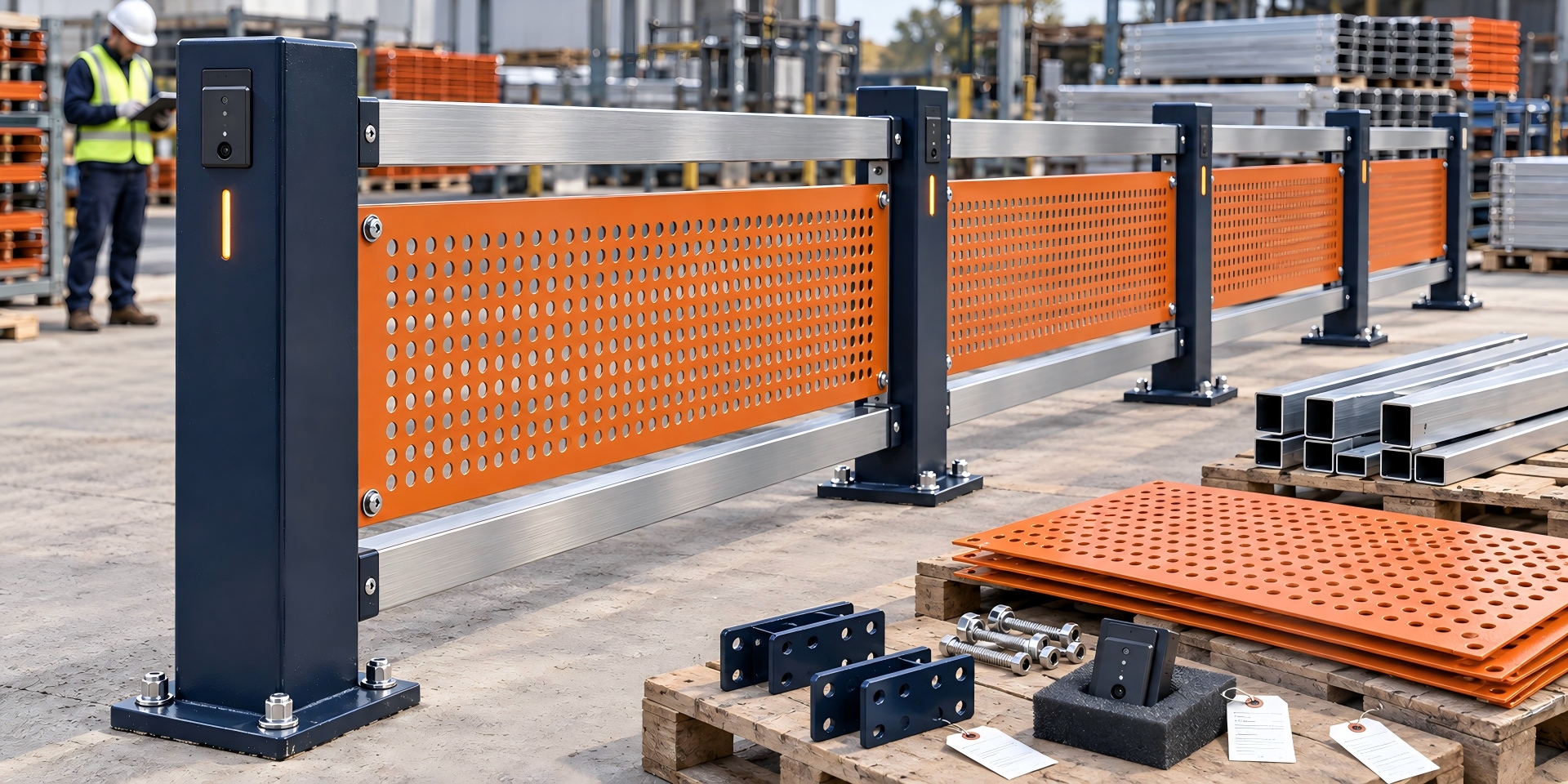
Temporary traffic layouts may change several times during one project. A relocatable barrier can help contractors respond without rebuilding the entire protection line.
The Netherlands road authority Rijkswaterstaat has reported the rollout of a GPS-guided smart mobile traffic barrier designed to protect road workers, reduce vehicle movements and support smoother traffic flow. Read the Rijkswaterstaat update.
Buyers should assess base stability, relocation method, connection strength, pedestrian guidance and approved movement conditions. Mobility still requires a clear operating procedure.
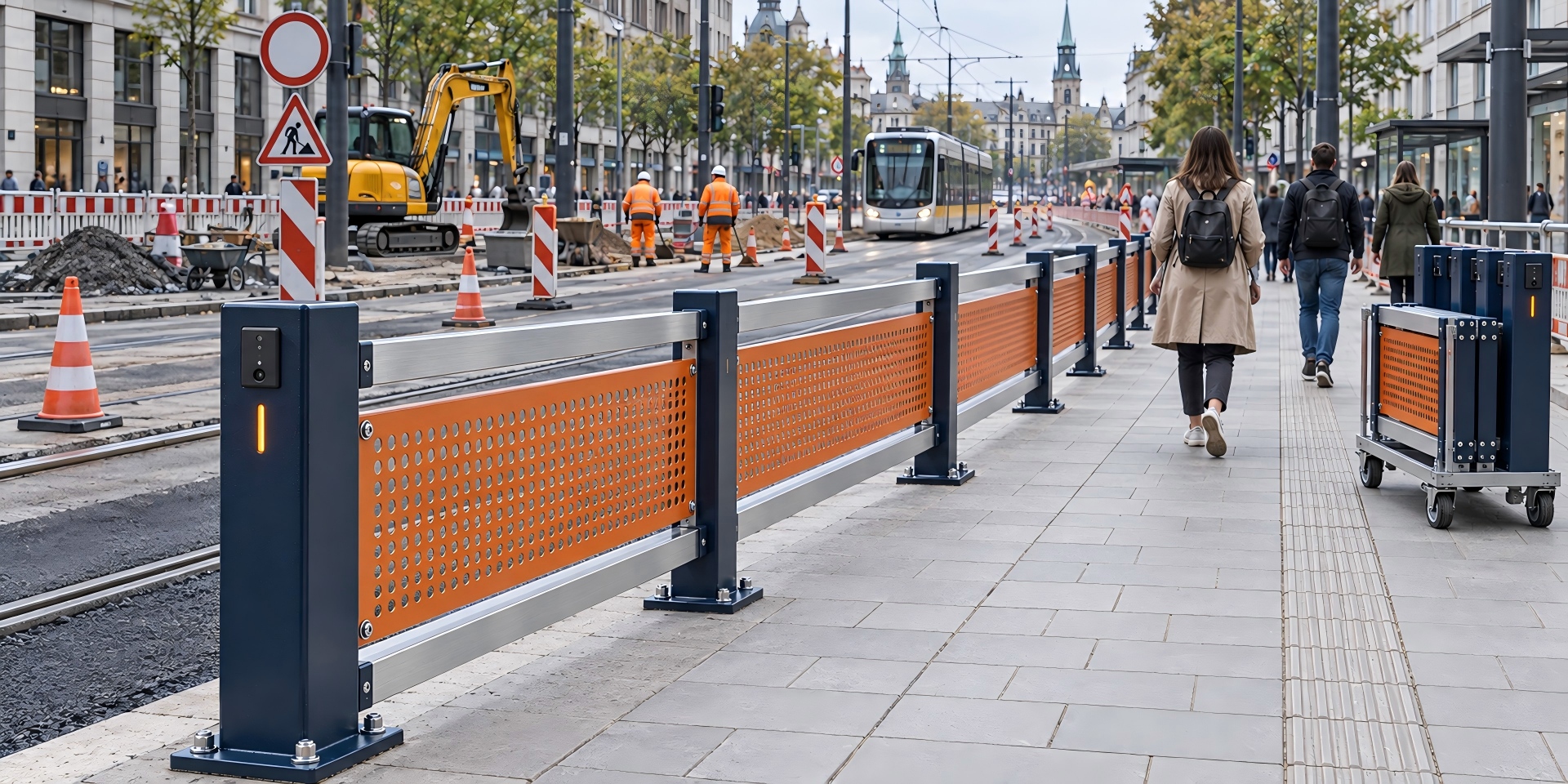
Depending on the project, sensors may support impact, displacement, tilt, vibration, environmental readings, access status or maintenance records.
The value comes from a decision loop: a condition is detected, recorded or transmitted, a responsible team receives an alert, and the asset is inspected or repaired. The OECD and International Transport Forum discuss how AI and data can support proactive road infrastructure safety management. Explore the OECD discussion.
Sensor selection should begin with a defined use case. Battery life, connectivity, data ownership, false alarms, cybersecurity, weather protection and maintenance access matter as much as detection range.
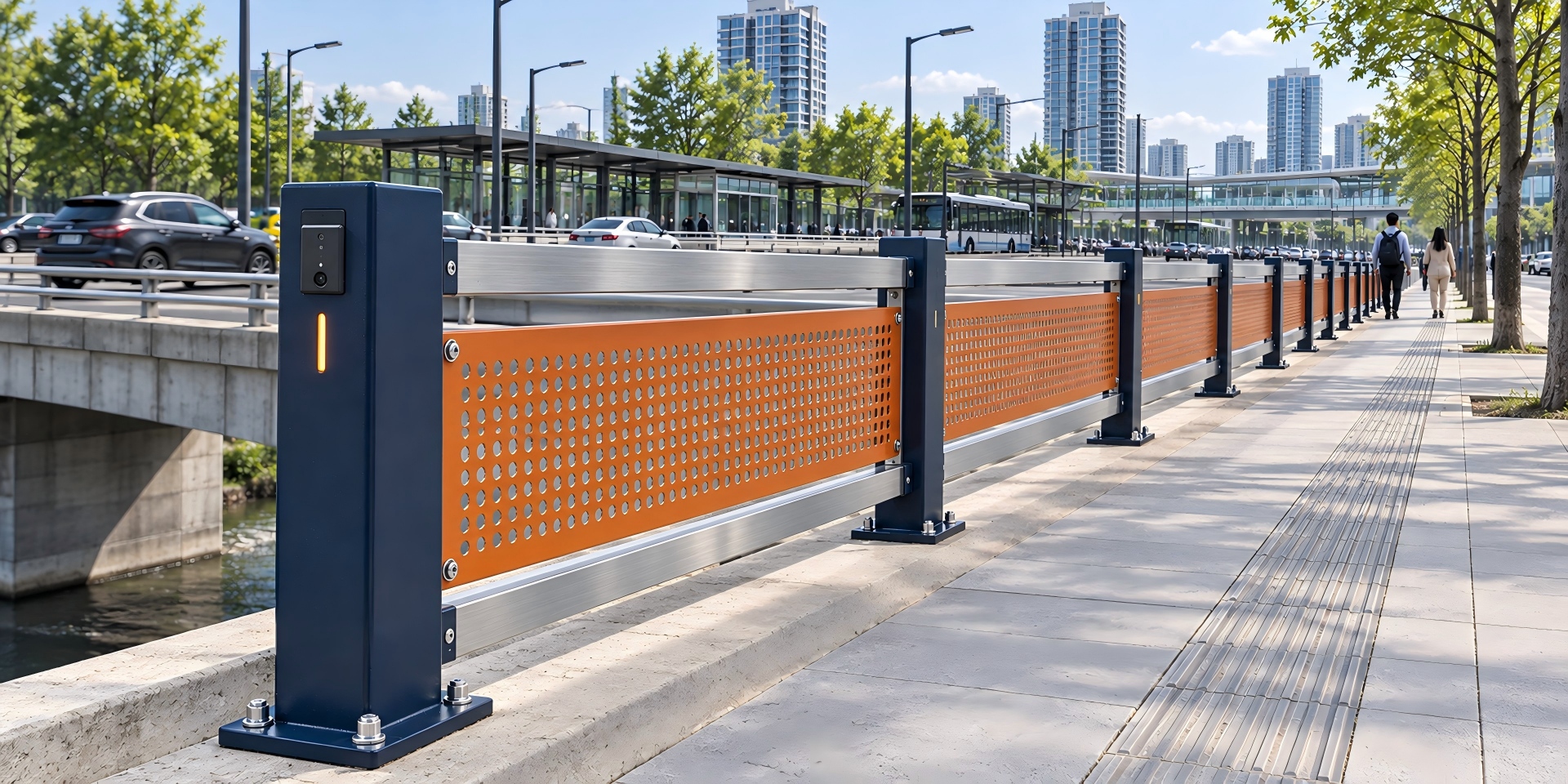
Guardrails are increasingly expected to do more than separate people and vehicles. With controlled design, one barrier may integrate guidance, visibility elements, lighting, cable routing, drainage interfaces, noise-reduction components or monitoring hardware.
Recent academic work on multifunctional modular median guardrails uses simulation and full-scale testing to examine how several functions can be combined while maintaining safety requirements. View the study on multifunctional modular median guardrails.
The design principle is “function without compromise.” Add-ons should not create sharp edges, climbing hazards, sightline problems, weak joints or difficult maintenance access.
Smart features may improve monitoring and maintenance, but they do not replace structural verification. Performance depends on rails, posts, connections, terminals, anchors, foundations and surrounding soil.
The U.S. Federal Highway Administration describes guardrail as a complete system whose performance depends on connected elements, not simply on the visible rail. Read FHWA Guardrail 101.
Before procurement, teams should map the applicable test and approval route. Depending on location and use, this may involve MASH or EN 1317, national manuals, impact testing, wind loading, corrosion protection and accessibility rules.
A review of movable systems also highlights the importance of crashworthiness, test methods and standards. Read the review in Machines.
For southern African projects, the South African road restraint systems manual is a useful reference for local design and installation expectations.
When comparing next-generation products, request more than a photograph and unit price. Confirm:
Intended road, pedestrian or work-zone function.
Structural configuration, material grades and corrosion protection.
Standard module dimensions and replacement-part availability.
Joint, base plate, anchor and foundation details.
Sensor purpose, power supply, communications and data handling.
Inspection, repair and component-replacement procedures.
Applicable tests, drawings and installation instructions.
Packaging, shipping, assembly and technical support.
This supports comparison of total project value rather than only initial purchase cost.
As guardrails become more modular and intelligent, supplier collaboration should start earlier. Teams need to confirm the operating scenario, local regulations, interfaces and maintenance plan before production.
A responsible project partner should provide controlled drawings, sample sections, material documentation, prototype feedback and revision records. For sensor-enabled systems, the supplier should explain exactly what the hardware can and cannot detect.
Guardrail innovation is moving toward modular construction, practical mobility, condition monitoring and multifunctional infrastructure. The strongest solutions will combine these features with proven structural performance, straightforward installation and disciplined lifecycle maintenance.
The opportunity is to specify adaptable systems instead of isolated metal products, while suppliers make new functions reliable and serviceable. Faster iteration can then support safer roads, shorter work zones and better asset value.
A smart guardrail combines a structurally verified barrier with monitoring, lighting, communication or other digital functions that support a defined operational need.
They can simplify transport and installation, allow damaged sections to be replaced independently and make future layout changes easier. The benefit depends on standardized connections.
Depending on the sensor, they may detect impact, tilt, movement, vibration, access status or environmental conditions. Accuracy, power, connectivity and maintenance must be confirmed.
No. Sensors and software support operation and maintenance; they do not replace structural design, impact testing, approval documents or site-specific engineering.
Confirm the required function, local standards, material and coating, module interfaces, foundation details, maintenance plan, data requirements, delivery scope and installation responsibilities.
Planning a modular or intelligent guardrail system? Share the application, location, drawings and required performance so the technical scope can be reviewed before quotation.
WhatsApp: +86 189 2407 9286
Email: info@aotianhouse.com
Website: www.aotianguardrail.com
If you are interested in our products and want to know more details, please leave a message here, we will reply you as soon as possible.
If you are interested in our products and want to know more details, please leave a message here, we will reply you as soon as possible.