
 Sep 11, 2026
 83
83
 admin
admin
Galvanized steel pedestrian barriers are used on urban roads, near schools and transit stops, at construction sites, around public events and in industrial areas. They guide pedestrian movement, separate people from traffic and protect restricted zones.
For buyers, the right barrier depends on its function, material, corrosion protection, dimensions, installation method and maintenance requirements. Product appearance and unit price should not be the only decision factors.
The term pedestrian barrier usually refers to pedestrian guidance or separation. It is different from a vehicle crash barrier. The UK Department for Transport pedestrian guardrailing guidance covers the assessment of pedestrian guardrail schemes, while FHWA Guardrail 101 explains the purpose of roadside vehicle guardrails.
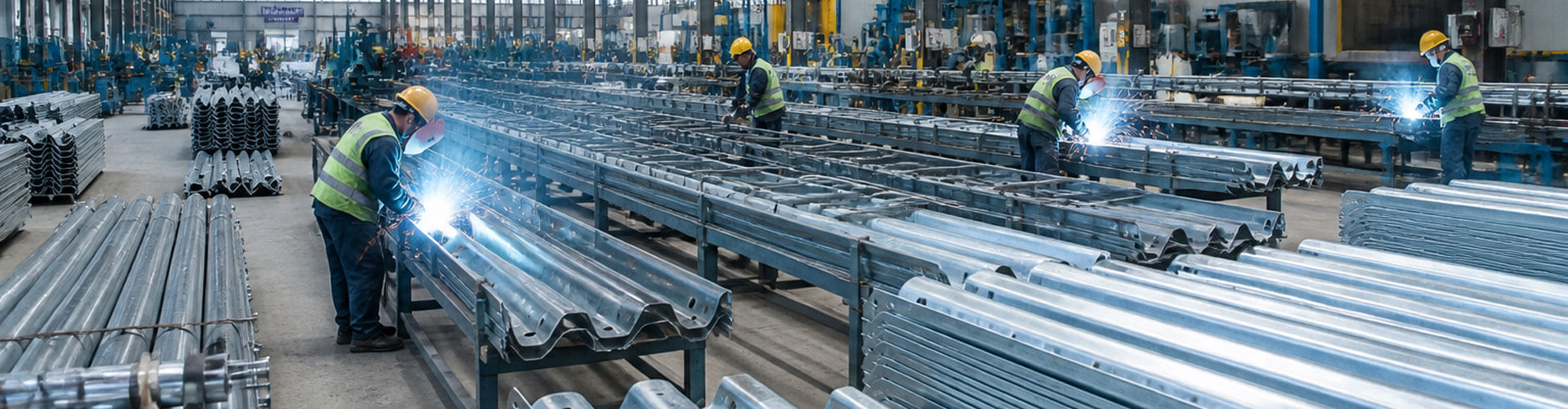
A galvanized steel pedestrian barrier normally consists of steel tubes or sections, posts, rails, vertical bars, connectors and bases. Zinc protection helps reduce corrosion when the product is exposed to rain, sunlight, dust and road salt.
The two common product groups are:
| Type | Typical use |
|---|---|
| Fixed pedestrian barrier | City streets, schools, bridges, sidewalks and public facilities |
| Portable pedestrian barrier | Roadworks, events, temporary closures and crowd control |
Fixed barriers are usually embedded or bolted to the ground. Portable barriers use flat, bridge or wheeled bases and can be relocated when the site layout changes.
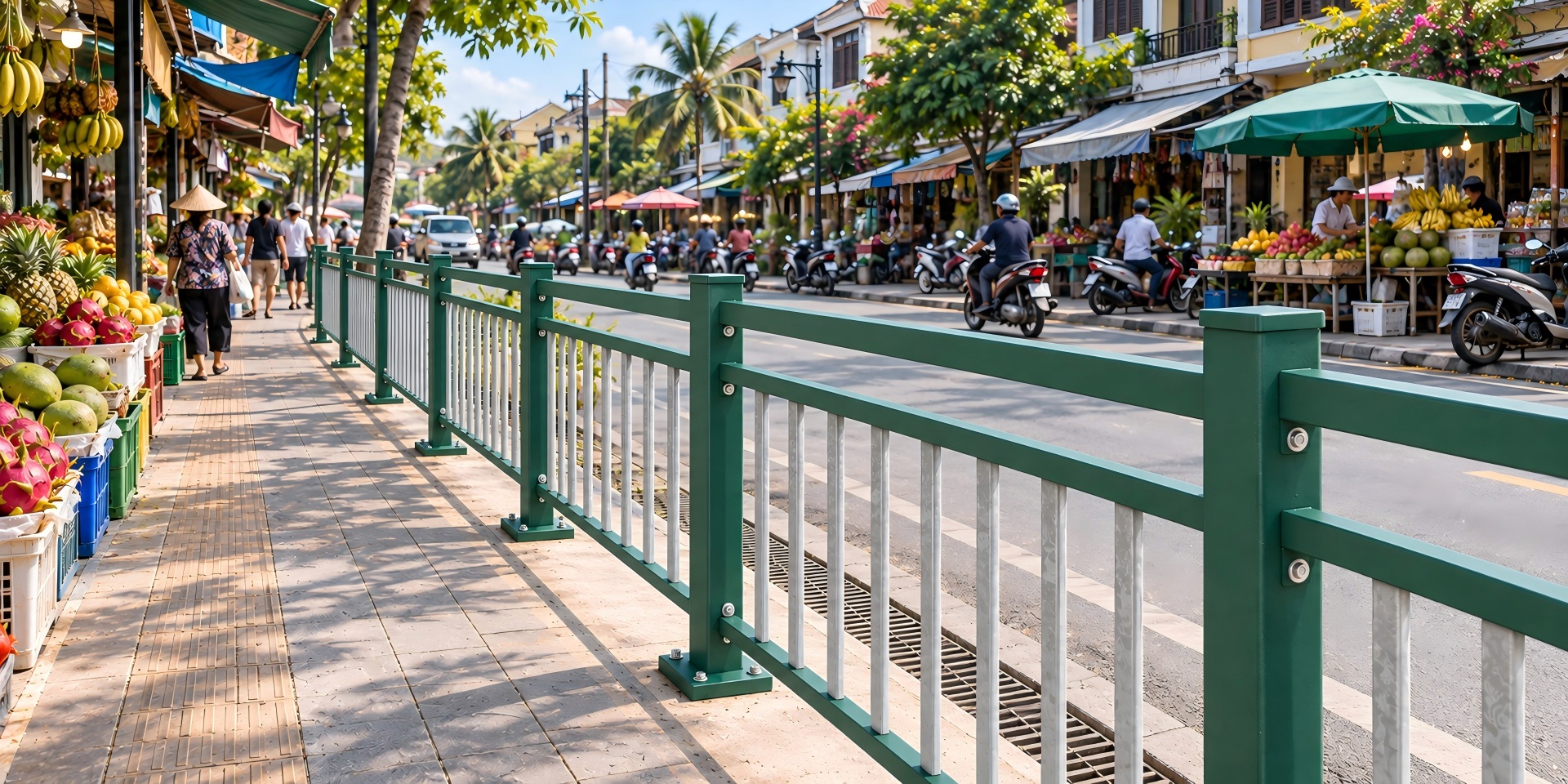
Fixed barriers can guide people toward marked crossings and create a clear separation between the footway and the carriageway.
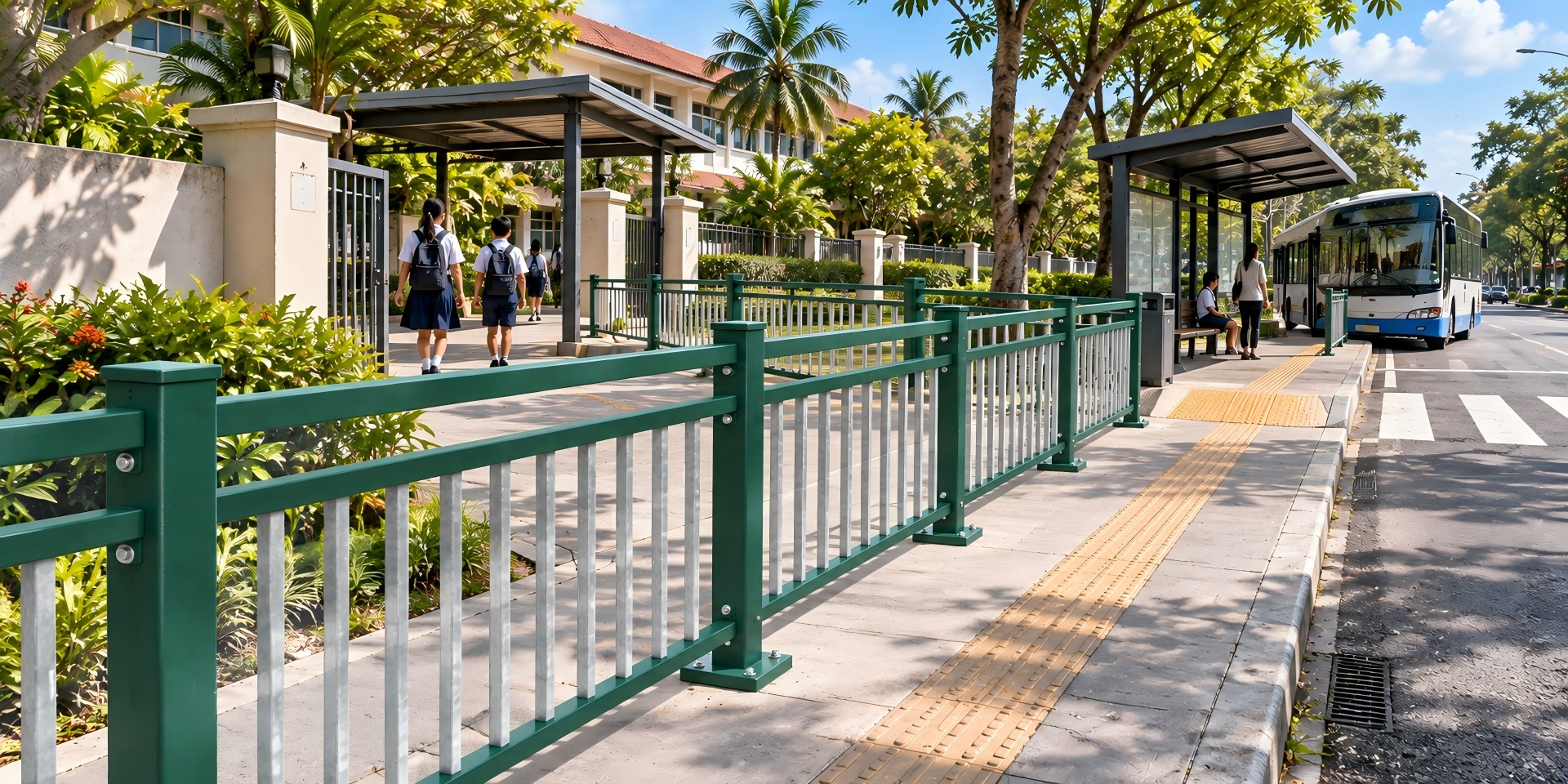
Schools, hospitals and civic buildings may need a visible boundary between pedestrian areas and traffic lanes. Rounded ends, stable anchoring and anti-climb details should be reviewed during design.
At bus stops, tram corridors and station entrances, barriers help organize pedestrian routes and waiting areas without blocking necessary access.
Portable barriers are suitable for temporary traffic management, construction zones, queues and public events. Interlocking connectors allow sections to form a continuous line.
Barriers can protect walkways, loading areas, equipment zones and building entrances from uncontrolled vehicle or pedestrian movement.
Hot-dip galvanized steel is a practical option for many outdoor projects. Confirm the steel grade, galvanizing process, coating inspection method and treatment of cut edges and welded areas.
Some public works specifications require steel components to be galvanized after welding, drilling and cutting, with galvanizing certificates supplied for each batch. See the Hong Kong Housing Authority metalwork specification for an example of project documentation requirements.
Powder coating can be added when a city requires a specific color or a coordinated streetscape. Confirm whether the galvanized base remains part of the system and how damaged areas will be repaired.
Painted steel may suit projects with an established recoating plan. Stainless steel offers a different appearance and high corrosion resistance but usually has a higher purchase cost. Aluminum is lightweight, but its structural suitability depends on the design and site conditions.
Ask each supplier to state the following information clearly:
Overall height and panel length
Post spacing and vertical bar spacing
Tube, plate and bar thicknesses
Fixed or portable base type
Corner, end and gate options
Connector and anchoring method
Galvanizing or coating process
Packaging, shipping and installation scope
Available customization and replacement parts
Local specifications control the final dimensions. For example, Oklahoma City pedestrian railing details show how pipe size, picket spacing and concrete attachment details can be defined in a public works drawing.
The barrier should have smooth connections, protected ends, stable foundations and enough clear footway width for normal pedestrian use. Check its effect on wheelchairs, strollers, bicycles, tactile paving, ramps, drainage and emergency access.
There is no universal dimension for every city. The project designer should confirm local road, accessibility and public-realm requirements. Central Bedfordshire Council guidance notes that guardrails should be justified carefully because unnecessary barriers may increase walking distances or restrict some users.
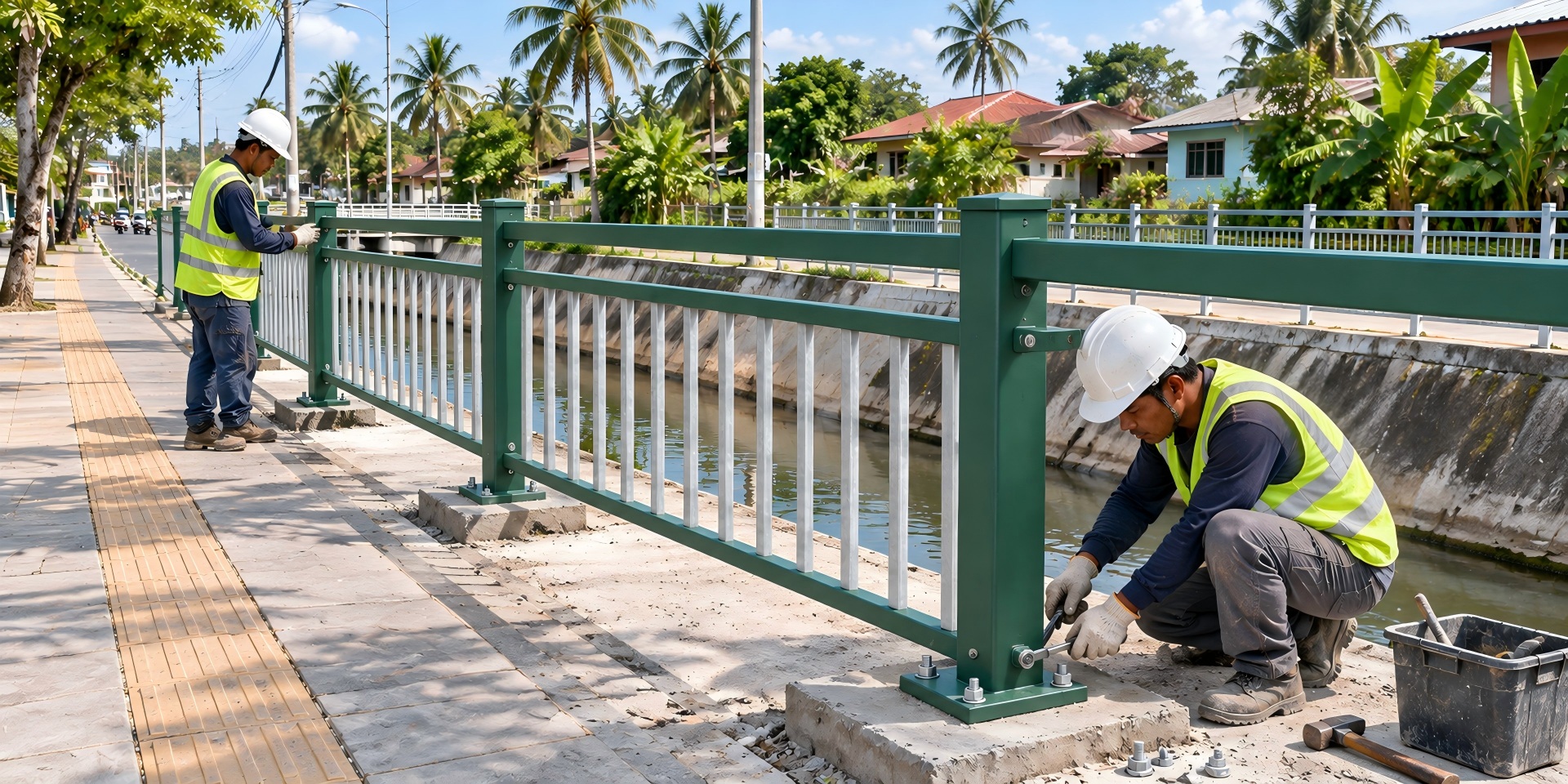
Installation details depend on the ground condition. Typical methods include embedded posts, base plates with anchor bolts and modular connectors. Request drawings for foundations, edge distances, corners, end sections and replacement procedures before production.
A suitable supplier should be able to provide:
Product specifications and structural drawings.
Material, galvanizing and quality documents.
Customized lengths, corners, colors and connections.
A sample section or trial installation.
Export packaging and delivery support.
Installation guidance and replacement components.
For a large order, approve a physical sample before mass production. Check the coating, welds, spacing, fasteners, alignment and anchoring details.
Survey the route, pavement, corners, slopes and access points.
Define whether the barrier is fixed, portable, pedestrian-only or vehicle-rated.
Confirm local authority and accessibility requirements.
Approve the design, finish, dimensions and quantities.
Inspect a sample or trial section.
Produce, install and inspect the completed barrier line.
A galvanized steel pedestrian barrier should combine corrosion protection, stable construction, safe detailing, accessibility and practical installation. The best solution is not necessarily the cheapest or most decorative product. It is the system that matches the project function, local requirements, site exposure and maintenance plan.
Yes. They are commonly used outdoors, but the required galvanizing and maintenance plan depends on the climate, salt exposure, pollution and local specification.
A pedestrian barrier guides or separates people. A crash barrier is designed for vehicle impact conditions and requires a different design and performance assessment.
Yes. Suppliers can usually customize panel length, height, color, bar spacing, corners, end sections, bases and anchoring details according to approved drawings.
Request the product type, material, finish, dimensions, accessories, installation assumptions, packaging, delivery terms, technical documents and required certificates.
Share the project location, application, estimated length, site drawings or photos, preferred finish and local requirements. A supplier can then review the barrier type, layout, installation details and quotation basis.
WhatsApp: +86 189 2407 9286
Email: info@aotianhouse.com
Website: www.aotianguardrail.com
If you are interested in our products and want to know more details, please leave a message here, we will reply you as soon as possible.
If you are interested in our products and want to know more details, please leave a message here, we will reply you as soon as possible.