
 Sep 17, 2026
 40
40
 admin
admin
"Highway guardrail mesh" is not one single product. It may refer to metal mesh fencing for roadside boundaries and access control, a mesh-based crash barrier, an anti-glare screen, or wildlife exclusion fencing. These products perform different safety functions and should not be substituted based only on appearance or product name.
If a product must contain or redirect an errant vehicle, it should be designed and evaluated as a complete roadside safety system. The U.S. Federal Highway Administration explains that guardrails protect vehicles that leave the roadway and can reduce crash consequences through redirection, deceleration, or containment. The rail face, posts, soil, connections, end treatment, and anchoring system all affect performance. Read FHWA Guardrail 101
If the main project goals are road separation, access control, glare reduction, or wildlife exclusion, mesh fencing and screens can offer useful visibility, airflow, and sectional maintenance. The correct starting point is to define the project function and then match the product type to local requirements.
Compared with a solid wall, a metal mesh structure can define a road boundary while retaining partial visibility and airflow. Road operators can inspect both sides more easily, and the fence creates less visual obstruction for drivers and pedestrians.
For medians, roadside areas, bridge approaches, toll facilities, and work zones, mesh opening, height, and post spacing can be selected for the site. Ordinary highway fencing should not be assumed to provide bridge fall protection or vehicle crash protection unless the complete system is designed and approved for that purpose.
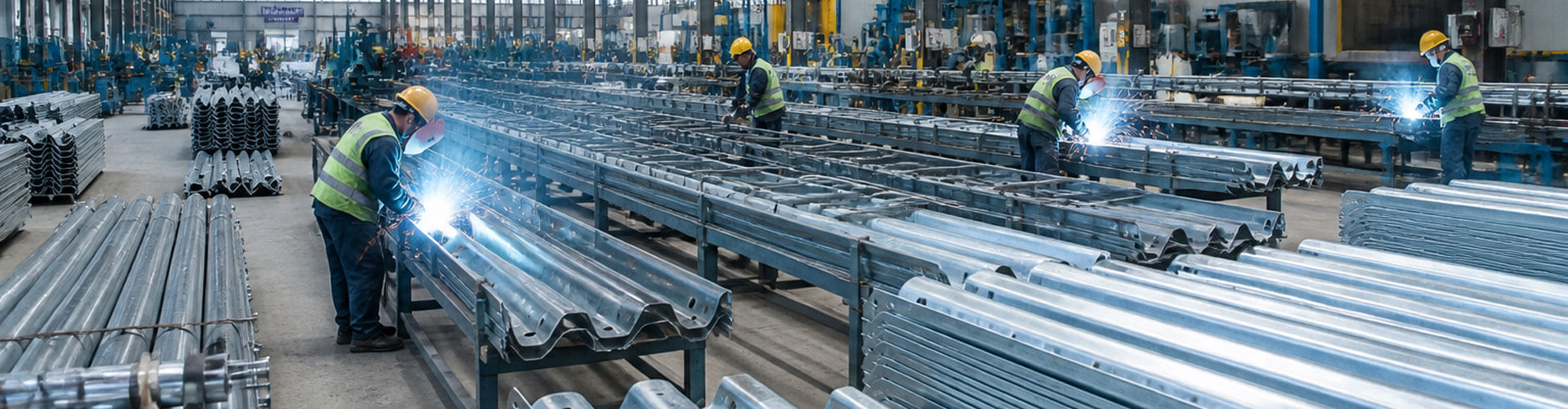
Highway fencing is exposed to rain, ultraviolet radiation, dust, de-icing salts, humid air, and vehicle emissions. Hot-dip galvanized steel can provide corrosion protection for the steel substrate and is commonly considered for outdoor road fencing, mesh barriers, and some anti-glare structures.
Galvanizing alone does not make every product equally durable. Buyers should confirm the steel grade, wire diameter or sheet thickness, galvanizing process, coating requirement, cut-edge treatment, and fastener material. Coastal or highly corrosive locations may require a higher protection class or an additional coating system.
Guardrail mesh systems generally include mesh panels or sheets, posts, connectors, end components, and foundations. Standardized parts can be combined around curves, bridge edges, medians, slopes, and access points.
For long highway projects, consistent panel widths, post spacing, and connection methods can simplify setting out, spare-parts management, and replacement. On sloped sections, the design team should confirm whether stepped installation, flexible connections, or special posts are needed.
Highway work often needs to proceed without extended traffic closures. Sectional panels, posts, and connectors can be installed in phases and replaced locally after impact or other damage.
Modular components do not remove the need for sound foundations and connections. Post embedment, concrete bases, anchors, connectors, and end closures should match the site's wind loads, soil, slope, and required road clearance.
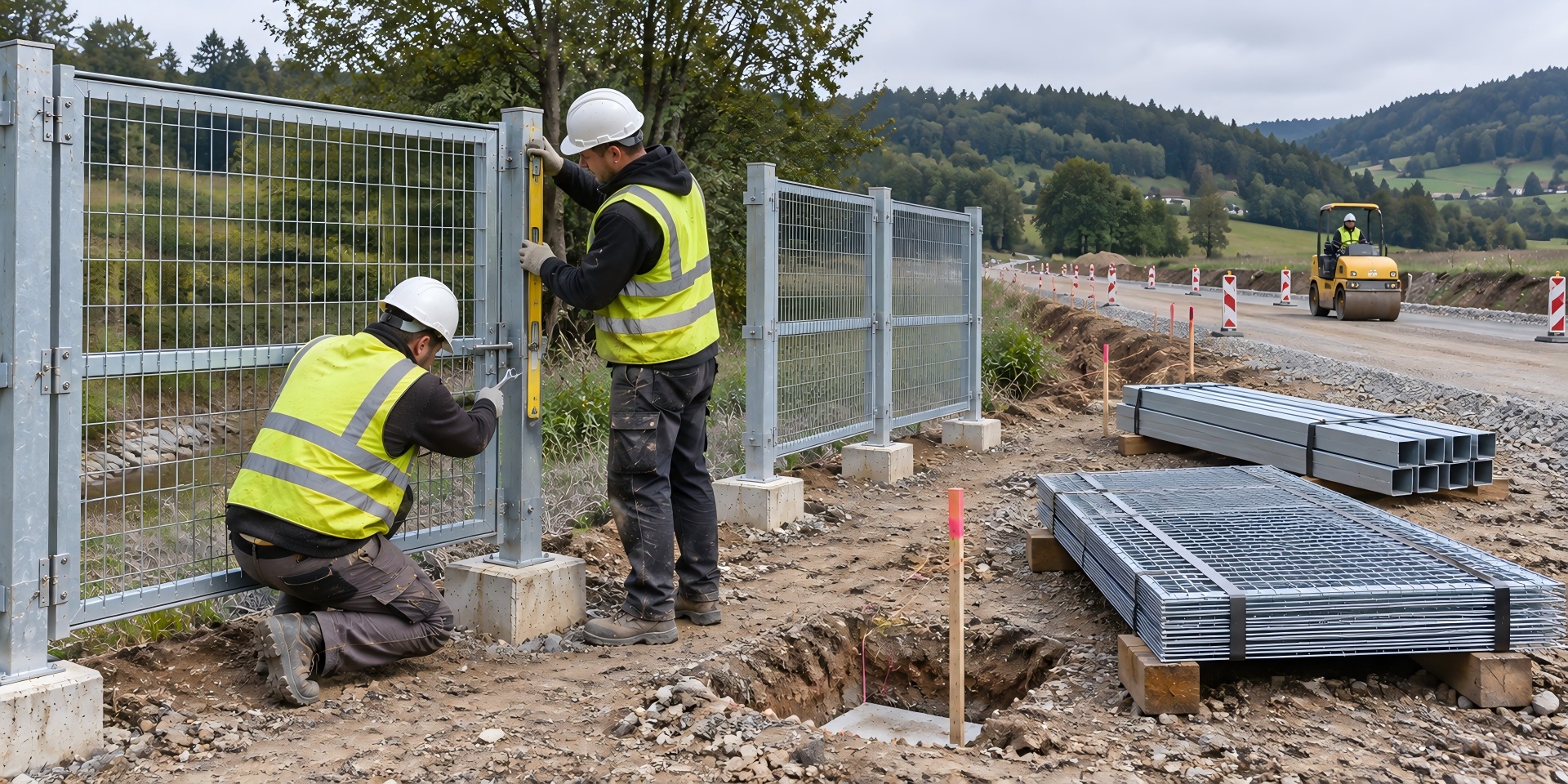
A single highway project may require several types of mesh products. Roadside fencing can control access, median screens can reduce headlight glare, wildlife fencing can limit animal crossings, and temporary safety fencing can separate active work zones.
Dividing the site by function is generally more practical than asking one product to solve every safety problem. It also makes the BOQ, construction planning, and maintenance strategy clearer.
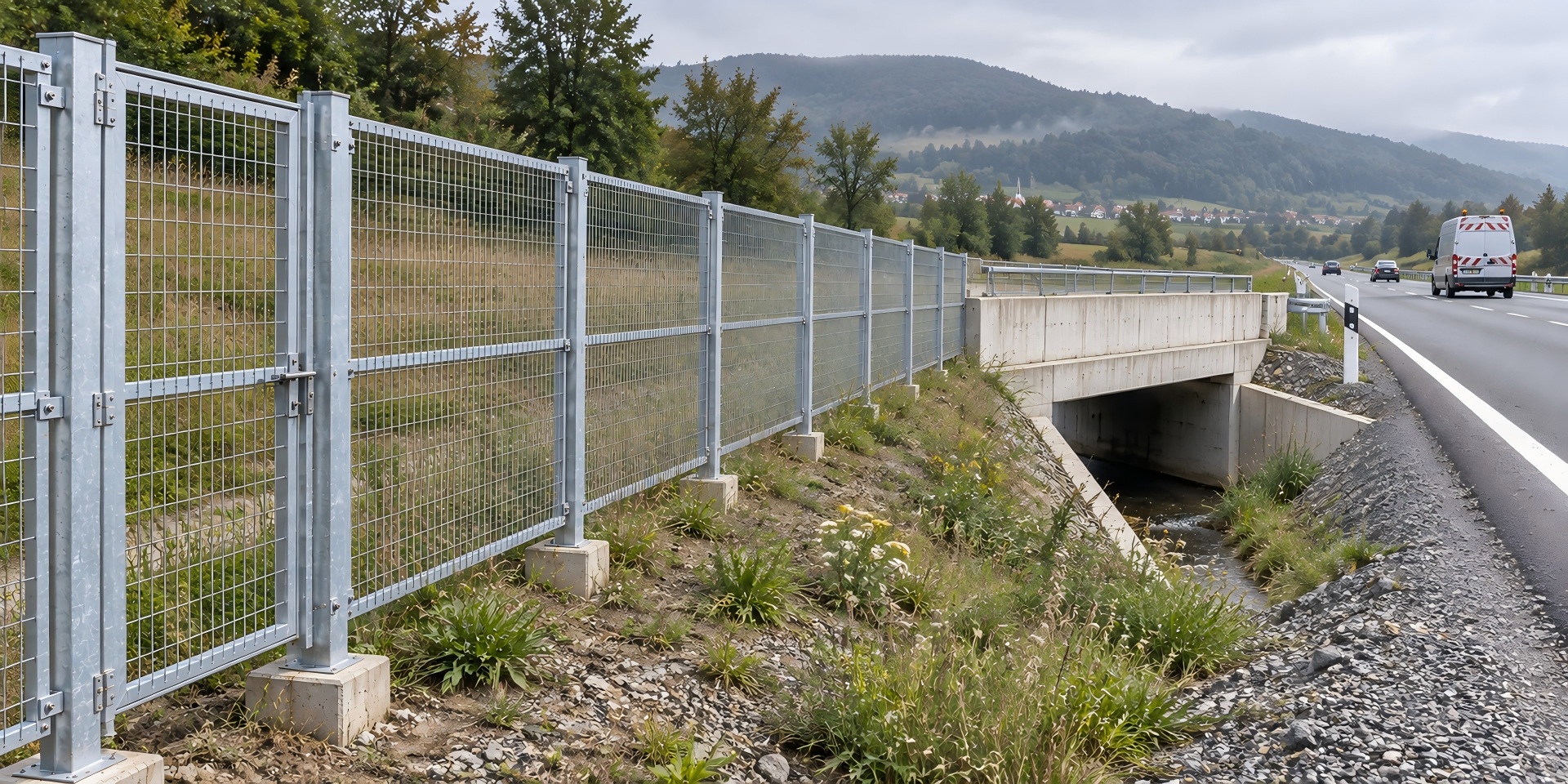
This is used along road edges, toll facilities, service areas, under-bridge spaces, and infrastructure compounds. Its functions can include access control, pedestrian separation, and limiting vehicle or animal entry. It is not automatically an impact-tested vehicle restraint system.
These use mesh panels, posts, energy-management or redirection components, and end treatments as a complete vehicle protection system. They should only be used for a specified crash-protection application after the required testing, assessment, and approval. Mesh size or steel thickness alone cannot prove crash performance.
Anti-glare mesh is commonly installed in medians, on bridges, viaducts, or near tunnel entrances to reduce headlight interference from opposing traffic. Design should consider the blocking angle, driver sight lines, wind loads, transparency, screen height, and maintenance access.
This is used in areas with significant wildlife movement or ecological sensitivity. Mesh opening, bottom closure, corners, drainage points, and connections to culverts and bridges are important to reduce animal access to the road.
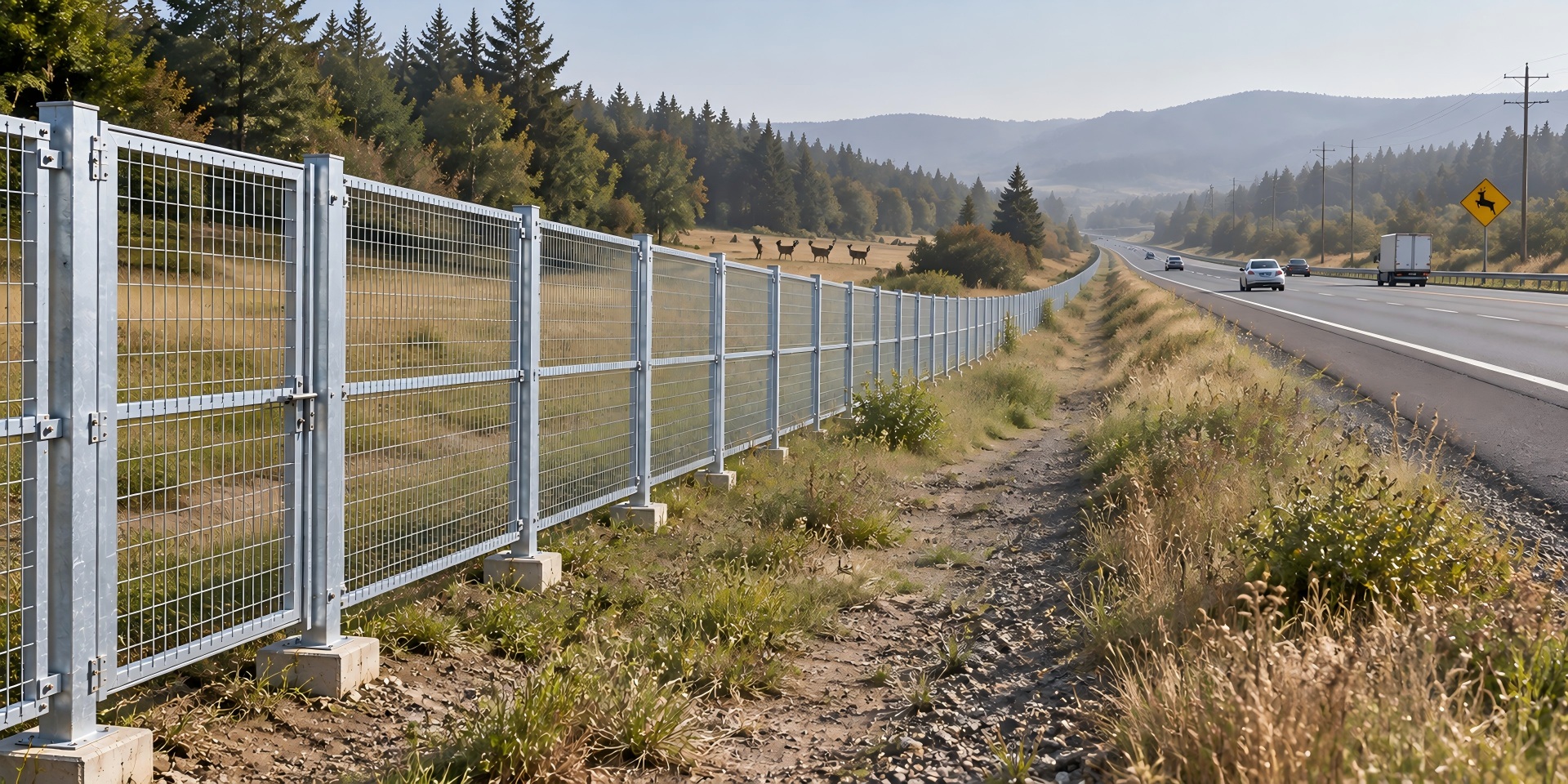
Before requesting quotations, state whether the product is for crash protection, roadside boundary control, pedestrian separation, glare reduction, wildlife exclusion, or work-zone separation. Each function has different design parameters, acceptance criteria, and liability boundaries.
Road restraint systems should be checked against the requirements of the project owner and the country where they will be installed. U.S. projects commonly reference the AASHTO MASH framework. FHWA explains that MASH provides guidelines for evaluating the crash performance of permanent and temporary highway safety features. Read FHWA AASHTO Guidance
FHWA also emphasizes that a guardrail functions as a system. End treatments, connections, and site conditions affect real-world performance. A material certificate for one mesh panel does not prove that the complete system has the required crash approval.
Confirm the steel or wire grade, wire diameter or sheet thickness, mesh opening, post specification, connectors, fasteners, galvanizing requirement, coating system, and corrosion protection after cutting or welding.
South African road-work specifications also define requirements for fully galvanized mild-steel wire, minimum wire diameter, and mesh opening for wire netting. This illustrates why material and dimensions must be selected against the project specification rather than chosen independently. Read the South African road-work specification
The mesh panel is only one part of the system. Confirm post spacing, end posts, corner components, gates and maintenance openings, concrete foundations, anchors, clamps, and the interface with drainage and slopes.
For bridges, embankments, or high-wind areas, an engineer should review the foundation and connection design. Loose, suspended, or disconnected panels can weaken access control and increase maintenance risk.
Mesh opening and fence height should be considered together with driver sight lines, pedestrian activity, animal size, wind loads, and drainage. Near ditches, culverts, and slopes, the fence should not block water flow or create difficult-to-clean ponding areas.
Long highway projects should also retain practical inspection and repair access. Consistent panel sizes, component identification, and spare-parts specifications support later asset management.
The cost of highway guardrail mesh may include materials, posts and foundations, transport, installation, traffic management, inspection, local replacement, and maintenance. A lower unit price may not be economical if the system needs extensive site cutting, special connectors, or frequent repairs.
Ask suppliers to quote against the BOQ or project drawings and define the scope for product specifications, packing, loading quantity, shipping terms, installation tools, foundations, technical support, inspection documents, spare parts, and warranty limits.
For phased highway construction, lock the material, color, mesh opening, post, and connector specifications early. This helps prevent visible differences between production batches.
Provide the road class, installation location, project country, and site photographs.
Define whether the product is for crash protection, separation, glare reduction, wildlife exclusion, or work-zone safety.
Provide plans, sections, quantities, and road-clearance requirements.
Request material specifications, connection details, foundation recommendations, and installation method statements.
Check test reports, inspection documents, and project-approval requirements against local standards.
Confirm samples, color, packing, transport, installation, and acceptance responsibilities.
Install a sample section before proceeding with bulk supply and sectional acceptance.
Guardrail mesh can provide clear boundaries, access control, visibility, airflow, and sectional maintenance for highway projects. Galvanized steel, standardized components, and flexible installation can suit roadside fencing, medians, bridge surroundings, wildlife protection, and selected anti-glare applications.
However, guardrail mesh is not a universal answer to every road-safety problem. Project teams should define the safety function first, then review local standards, crash-test requirements, material specifications, foundations, and installation conditions. Correct product classification and complete system design provide the foundation for reliable highway safety.
Not directly. The two systems have different structures and crash-performance characteristics. A mesh crash system can only be considered for a vehicle-protection application after the required system testing, assessment, and approval.
It can be considered, but salt exposure, humidity, wind loads, and maintenance conditions should be reviewed. Confirm the galvanizing, coating, fasteners, and cut-edge corrosion protection requirements.
No. Mesh opening should match the project function, pedestrian separation, wildlife protection, sight lines, wind loads, and drainage. Mesh size alone does not determine overall safety.
Yes. Height, opening, wire diameter, panel width, posts, color, gates, and end components can often be customized, subject to project standards and site conditions.
Ask for material specifications, surface-treatment details, structural and connection drawings, packing lists, installation instructions, inspection or test documents, spare-parts recommendations, and warranty scope.
SANTIAN can help evaluate guardrail mesh and related road-safety fencing according to the road location, project function, quantity, local standards, and installation conditions. Final selection should be confirmed by the project engineer and road authority.
WhatsApp: +86 189 2407 9286
Email: info@aotianhouse.com
Website: www.aotianguardrail.com
If you are interested in our products and want to know more details, please leave a message here, we will reply you as soon as possible.
If you are interested in our products and want to know more details, please leave a message here, we will reply you as soon as possible.