
 Sep 11, 2026
 97
97
 admin
admin
Urban roads need clear separation between pedestrians and moving traffic. A municipal pedestrian guardrail can guide people toward safer crossings, protect footways and improve order around schools, transport stops and busy streets.
Choosing the right guardrail requires more than comparing appearance or unit price. Project owners should review its function, local requirements, material, accessibility, installation method, maintenance plan and supplier support.
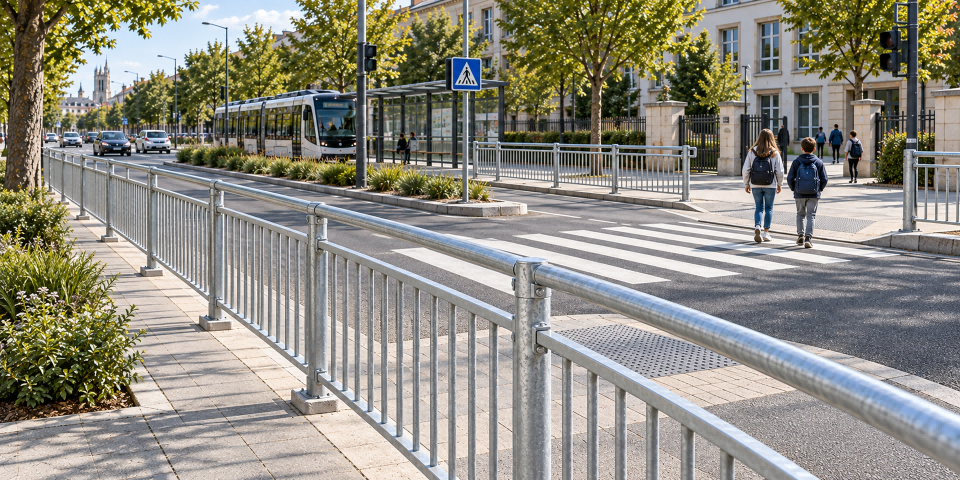
Municipal pedestrian guardrails are commonly installed beside:
Urban roads and intersections
Schools, hospitals and public buildings
Bus stops, tram corridors and transport interchanges
Marked crossings and pedestrian refuge areas
Commercial streets, plazas and public spaces
Bridges, ramps and level-change areas
Industrial parks and public facilities
The layout should guide movement without unnecessarily narrowing the footway. Wheelchair, stroller, bicycle and maintenance access must remain practical.
First decide whether the product is intended to:
Channel pedestrians toward a designated crossing
Separate people from vehicle traffic
Discourage entry into the carriageway
Reduce climbing in school or transit areas
Protect a bridge edge or ramp
Create a temporary work-zone barrier
If the project must contain an errant vehicle, specify a tested vehicle restraint system instead. A pedestrian railing should not be presented as a highway crash barrier.
Review the complete route before choosing standard panels. Note straight runs, corners, slopes, kerbs, drainage, tactile paving, signs, lighting columns, driveways, gates and underground utilities.
A modular system with standard panels, corner sections, end treatments and connectors can simplify installation. It also makes future replacement easier because damaged sections can be changed individually.
Outdoor guardrails must withstand rain, sunlight, dust, road salt and temperature changes. Common options include:
| Option | Main consideration |
|---|---|
| Hot-dip galvanized steel | Practical corrosion protection for general outdoor use |
| Galvanized steel plus powder coating | Adds a specified color to the galvanized base |
| Painted carbon steel | Requires a clear repainting and maintenance plan |
| Stainless steel | Suitable where appearance and corrosion resistance justify a higher budget |
| Aluminum | Lightweight option for selected site conditions |
For coastal, humid or industrial environments, ask about the material grade, galvanizing process, cut edges and weld-area treatment. A low initial price may create higher repainting or replacement costs later.
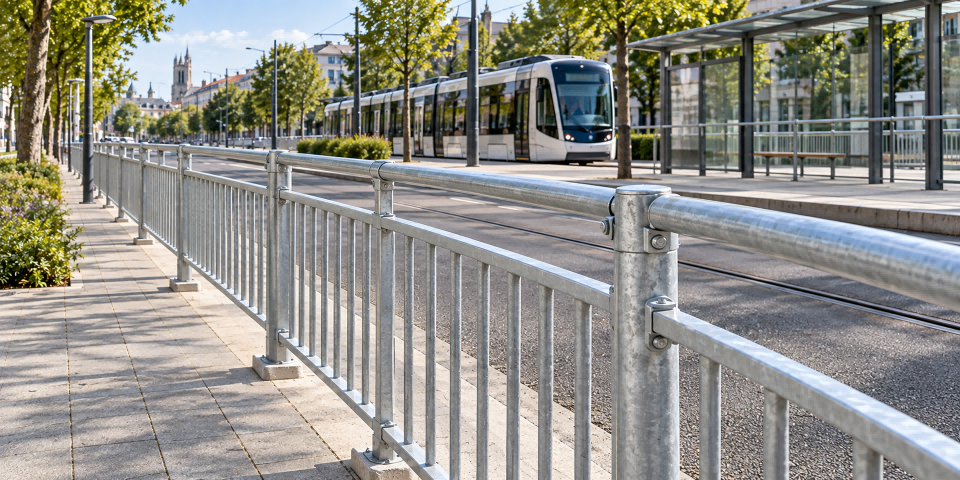
Review the proposed height, post spacing, vertical bar spacing, end details and clear footway width with the project designer. The rail should have smooth connections, protected ends and no sharp projections.
There is no single universal dimension for every city. Local road, accessibility and public-realm requirements should control the final design. Guidance from Central Bedfordshire Council also highlights the need to balance safety benefits with walking distance and access for mobility-impaired users.
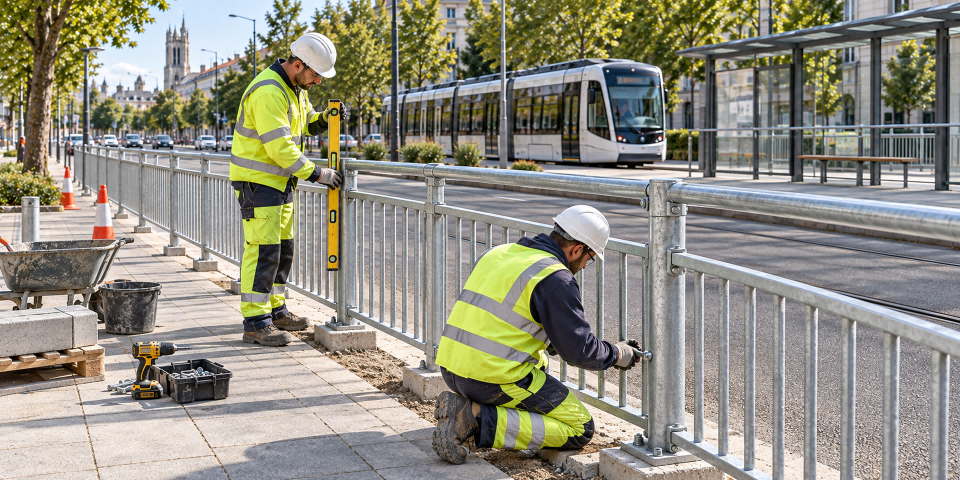
Installation details vary between new concrete pavement, asphalt, bridge decks and existing sidewalks. Typical methods include embedded posts, base plates with anchor bolts and modular connectors.
Ask for drawings showing:
Post and rail sections
Base plate or embedded-post details
Anchor type and edge distance
Corner and end connections
Tolerance for uneven paving
Repair and replacement method
The guardrail should connect positively to the ground and remain aligned after installation. Coordinate product drawings with civil works drawings before production.
Before placing a municipal order, request the specification sheet, general arrangement drawings, material information, surface-treatment details, installation instructions, quality records, packaging plan and relevant certificates.
Ask the supplier whether it can provide a sample section, customize lengths and corners, support local installation and supply replacement parts later. A physical sample or trial section is useful for checking finish, spacing, fasteners and installation fit.
Standards must be matched to the product function. The South African Road Restraint Systems Manual distinguishes vehicle restraint systems from pedestrian restraint systems. EN 1317 or MASH references should not be used as a blanket claim for an ordinary pedestrian railing.
Hot-dip galvanized steel is a practical option for many outdoor municipal projects. Powder coating can be added when the city requires a specific color or streetscape appearance.
The best choice depends on climate, exposure and the owner’s maintenance plan. Compare purchase, transport, installation, cleaning, repainting and replacement costs instead of comparing only the initial unit price.
Survey the route: Record length, corners, slopes, pavement type, utilities and access points.
Define the function: Confirm pedestrian guidance, separation, edge protection or vehicle restraint.
Check requirements: Review local authority, accessibility and road-safety specifications.
Approve the design: Confirm height, spacing, finish, connections, end details and quantities.
Inspect a sample: Check materials, coating, joints, dimensions and installation details.
Produce, install and inspect: Use the approved documents and verify alignment, anchorage, clear width and continuity.
The right municipal pedestrian guardrail should balance safety guidance, durability, accessibility, installation practicality and streetscape quality. The best choice is the system that matches the project function, local requirements, environmental exposure and maintenance plan.
Clear drawings, a verified sample and complete technical documents make supplier comparisons easier and reduce installation problems.
A pedestrian guardrail guides or protects people along streets and public spaces. A highway guardrail is a vehicle restraint system designed for roadside crash conditions. They have different functions and requirements.
It is commonly considered for outdoor use because it provides corrosion protection to steel. The required coating and maintenance plan still depend on the local climate, exposure and project specification.
Yes. Panel lengths, corners, end sections, colors, bar spacing and anchoring details can usually be adapted to approved project drawings.
Request the product type, material, finish, dimensions, accessories, installation assumptions, packaging, delivery terms, technical documents and required certificates.
Share the project location, application, approximate length, site drawings or photos, preferred finish and local requirements. A supplier can then review the guardrail type, layout, installation details and quotation basis.
WhatsApp: +86 189 2407 9286
Email: info@aotianhouse.com
Website: www.aotianguardrail.com
If you are interested in our products and want to know more details, please leave a message here, we will reply you as soon as possible.
If you are interested in our products and want to know more details, please leave a message here, we will reply you as soon as possible.